Shooting Ball
- 4.7
- Rating
- 100.00M
- Installs
- Free
- Price

 Analysis by App-foxy
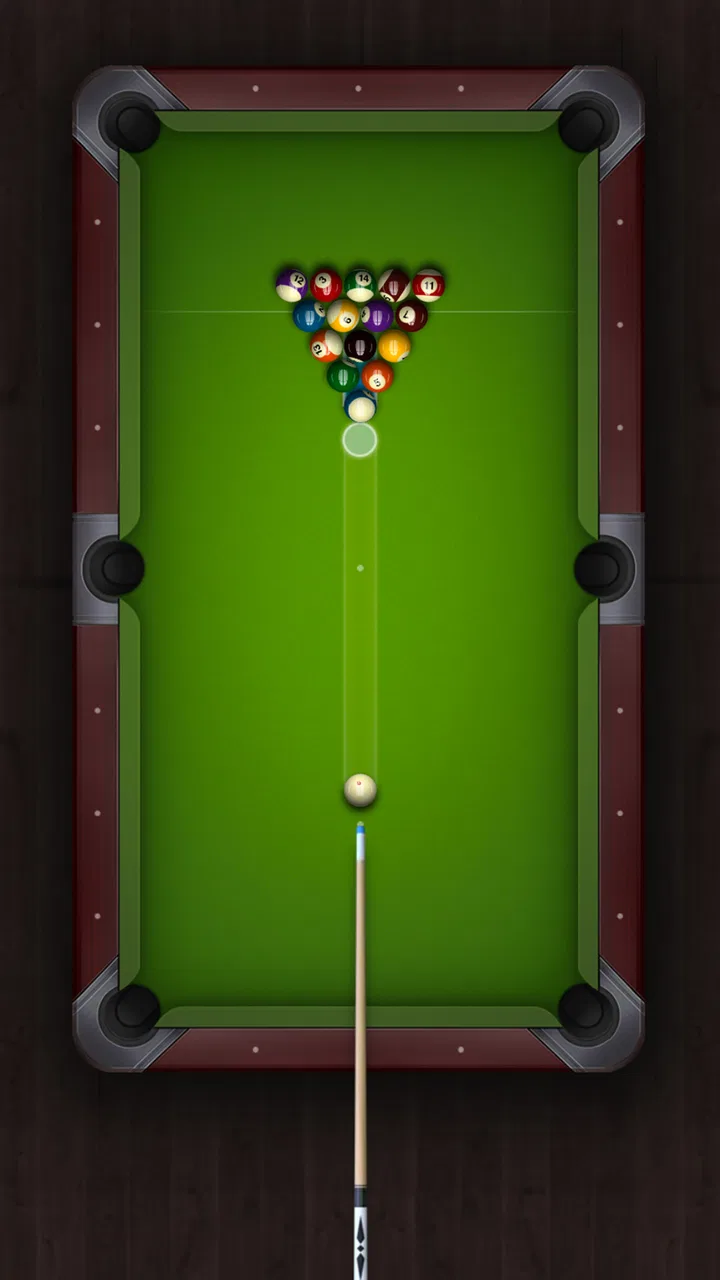
I enjoy sports games that let me start playing immediately, and Shooting Ball fits that mood better than a full billiards simulator. It is a vertical billiards game built around single-player sessions, so I can pick it up with one hand, take a few shots, and put it away without needing a long match or another person online. That simple structure is the main reason I found it appealing: the game is easy to understand, but lining up a clean shot still gives each turn a small moment of concentration.
At first glance, the idea sounds almost too narrow. A billiards game with a vertical layout and solo play does not offer the social atmosphere of a real pool hall or the variety of a larger sports collection. After spending time with it, though, I think that narrow focus is exactly what makes it useful. It works as a short break, a casual reflex-and-angle exercise, and a low-pressure way to enjoy pool mechanics without learning a complicated control scheme.
How the game feels during a quick session
The most important expectation to set is that this is a compact mobile game, not a detailed replacement for a physical table. The vertical presentation makes the board readable on a phone, and the single-player format keeps the pace under my control. I can play carefully when I want to think through a bank shot, or move more quickly when I am simply looking for something to do while waiting.
You May Also Like

 Google Keep - Notes and lists
Google Keep’s Quiet Growth Shows the Appeal of Simpler Notes
As mobile work gets busier, Google Keep keeps winning a simple contest: capture a thought quickly, find it later, and get on with the day.

 Blood Strike: 2.5 Anniversary
Blood Strike’s Loadouts Turn Every Drop Into a Tactical Gamble
A close look at Blood Strike’s custom loadouts: how fast access to signature weapons reshapes its battle royale rhythm, rewards preparation, and narrows the gap between fights.

 Pandora - Music & Podcasts
Pandora’s Music Is Easy to Start, but Harder to Recover
Pandora’s strength is its low-effort path from a seed to a station. Its weak spot is how much confidence it asks you to place in connection, setup, and quiet recovery.

 8 Ball Pool
 Is Built on Rivalries, Rematches, and Routine
A close look at the rivalries, rematches, shared routines, and unanswered safety questions that turn a quick pool match into a persistent mobile community.

 Samsung Music
’s Quiet Strength Is Playing What You Already Own
Its reach comes less from spectacle than from dependable access to a personal library. That simplicity is both the app’s strongest retention engine and its ceiling.

 AccuWeather: Weather Radar
AccuWeather Review: A Quick, Clear Forecast for Everyday Decisions
For everyday plans, the best forecast is the one you can understand quickly. AccuWeather makes rain timing, radar, and local conditions easy to act on, with a few trade-offs.
More From Our News Desk



That perceived speed depends heavily on how I play. The game does not force the same rhythm as a competitive online match, where another player’s turn creates a fixed pause. Here, my attention determines the tempo. A confident shot can make a session feel brisk, while a difficult position naturally slows everything down. I like that difference because it gives the game two useful personalities: a fast distraction and a more deliberate aiming challenge.
The controls are best approached with patience rather than hurried swipes. I found that a small adjustment can matter more than a dramatic one, especially when I am trying to send the cue ball toward a narrow opening. My practical tip is to make the first alignment for direction, then use a second, smaller adjustment for accuracy. Treating every movement as one large gesture makes it easier to overcorrect.
Another useful habit is to look beyond the ball I want to hit. The immediate contact is only part of the problem; the next position matters too. Even in a short solo game, planning the follow-up can separate a satisfying run from a sequence of awkward recoveries. This is where the sports label feels justified. It is not only about tapping a target. It rewards visual judgment, timing, and restraint.
The best way to enjoy Shooting Ball is to treat each shot as a small decision, not as a button press. That mindset also makes the game more relaxing. I do not feel that I need perfect speed or expert knowledge before I can have fun, but I still have room to improve through better angles and more controlled play.
What makes the vertical format practical
A vertical table is particularly convenient for short sessions. I can hold the phone naturally instead of rotating it, and the board remains focused on the central task. This makes the game suitable for a commute, a waiting room, or a few minutes before bed. It also avoids the feeling that I need to prepare for a full gaming session.
The trade-off is that the compact view may not satisfy people who want the broad perspective and physical atmosphere of traditional pool games. Players who enjoy detailed table layouts, realistic club presentation, or multiplayer tension may find the presentation intentionally limited. I see the vertical design as a strength for convenience, not as a substitute for a complete billiards simulation.
Handling longer play and busy moments
Short sessions are where the game makes the strongest impression, but heavier use deserves a realistic look. Repeated play can become more demanding on attention than on the device. The basic action is easy to understand, yet aiming the same way over and over can become tiring, particularly when I am trying to improve rather than simply pass time.
For longer sessions, I recommend changing the goal. Instead of chasing a perfect sequence every time, I might focus on cleaner positioning, fewer rushed shots, or learning how a particular angle behaves. This keeps the game from turning into a repetitive test of patience. It also reveals a strength that is easy to miss in a quick trial: the simple controls leave enough room for personal technique.
The heavier moment is usually not a complicated menu or a crowded interface. It is the concentration required when several shots depend on one another. A poor first decision can leave an uncomfortable next position, and recovering from it may require more careful aiming than the original shot. I appreciate that consequence because it gives the solo format some structure without needing a story or a large set of modes.
There is also a practical trade-off for players who prefer constant novelty. The focused design means the appeal comes from improving execution, not from discovering a wide range of unrelated activities. If I want a sports game that rotates between racing, football, tennis, and other events, this will feel too specialized. If I want a repeatable billiards challenge that I can understand in seconds, the limited scope is much easier to appreciate.
Resource expectations and everyday use
I would place this in the category of games that are easy to keep available for spontaneous play. It is free to download, and the listed age rating is Everyone, which makes it approachable for a broad audience. Optional purchases are listed from $0.99 to $4.99 per item, so anyone who prefers to avoid spending should pay attention to the purchase prompts and keep the free experience as the default.
The game supports devices running Android 6.0 or later. That requirement is helpful for people using older phones, although compatibility alone does not guarantee identical comfort on every screen. A smaller display can make fine aiming feel more delicate, while a larger phone may give the table more breathing room. I would judge the experience by control comfort rather than by screen size alone.
In everyday use, I would choose it for a short break rather than leave it running for hours in the background. That is not a criticism; the design naturally suits active, focused play. A person waiting for an appointment could complete a few attempts, stop without losing a large block of time, and return later when there is another spare moment. Someone seeking a long-form game with deep progression may need a different option.
One non-obvious advantage of this kind of session is that it does not require social coordination. I do not need to find an opponent at the right time or worry about matching a friend’s schedule. That makes it more dependable for solitary play. The downside is equally clear: there is no rival creating pressure, so motivation has to come from my own desire to improve.
Stability, recovery, and the limits of what to expect
My overall impression is that the game is built around a straightforward loop, which is generally helpful for reliability. There are fewer layers to understand than in a large sports title, and the core activity remains clear from one session to the next. I value that predictability when I want a game that starts with very little mental preparation.
Still, reliability is not only about whether a game opens. It is also about how easily I can recover from interruptions. Mobile play is often broken up by notifications, a phone call, or the need to lock the screen. For that reason, I would use it in short, self-contained bursts and avoid assuming that every unfinished moment will be as convenient as a deliberately completed session. The safest routine is to finish a shot or a natural stopping point before switching away.
I also would not judge the game by the standards of a high-end 3D sports production. Its appeal is the focused billiards interaction, not a promise of elaborate presentation. That distinction matters when deciding whether it belongs on a particular phone. A user who wants a visually rich simulation should look elsewhere; a user who values a clean, direct sports pastime is more likely to be satisfied.
The developer is PopStoneGameTechnologyLimited-Shooting, and the game has been available since November 16, 2019. Its current version is 1.0.216. Those details place it as an established mobile title rather than a brand-new experiment, while the version information is useful when checking whether a device is ready for the current release.
Its audience size also suggests that the basic concept has broad appeal: the game has passed 100 million installs, with an average rating of 4.7 from around 1.1 million ratings. I do not treat popularity as proof that every player will enjoy it, but it does reinforce my impression that the immediate billiards format is easy for many people to understand.
Where the experience can become frustrating
The biggest limitation is repetition. Once the novelty of the vertical table wears off, enjoyment depends on whether I like refining small decisions. Players who need constant unlocks, changing environments, or a strong narrative may run out of reasons to continue sooner than expected. The single-player structure is convenient, but it also removes the unpredictable moments that make competitive pool exciting.
Another point of friction is precision. A shot that looks nearly correct can still produce an unwanted result, and that can feel less like strategy when I am playing quickly. My solution is to slow down before important attempts and avoid making corrections while already committed to a direction. If I am in a hurry, I accept that the game becomes more about approximation than control.
The purchase range may also matter to families or to anyone who wants a completely uninterrupted free experience. Since the game is free with in-app purchases, I would check the device’s purchase controls before handing the phone to a child. The Everyone rating describes the intended age accessibility, but it does not remove the need for sensible spending safeguards.
Who should install it, and who should skip it
I would recommend this game to someone who likes pool but does not want a complicated simulator. It is a good fit for casual sports fans, people who enjoy angle-based challenges, and anyone looking for a solo activity that works in small pieces. It is also suitable for a player who prefers learning through repetition: each attempt gives another chance to improve aim, control, and shot planning.
It is less suitable for someone whose main reason for playing billiards is competition. There is no substitute here for the tension of facing a real opponent, reading another player’s style, or sharing a table with friends. A dedicated multiplayer pool game would be a better choice for that use case. Likewise, a detailed simulation is preferable for players who care about realistic table behavior and a broader collection of formal billiards experiences.
For a family member who has never played a pool game, I would describe it as approachable but not mindless. The basic interaction is clear enough to invite experimentation, while the better results come from slowing down and thinking ahead. For an experienced pool player, it may feel simplified, but that simplicity can be pleasant when the goal is a quick mobile version rather than a serious training tool.
One practical workflow I found useful is to play in two phases. First, I take a few relaxed shots to understand the current layout and avoid wasting attention on perfection. Then I switch into a planning mode for the more difficult positions, checking where the cue ball should finish rather than only where the target ball should go. This makes short sessions feel more purposeful and helps prevent frustration after one poor attempt.
My performance verdict after regular use
My verdict is positive, with a clear qualification: Shooting Ball succeeds because it stays focused. The vertical layout, solo format, and direct billiards action make it easy to start and easy to fit into ordinary spare time. I found the perceived speed comfortable for quick play, while the more demanding shots gave the game enough depth to avoid feeling completely disposable.
Its resource demands are best understood through its role. This is a phone game for active, short sessions, not an elaborate sports world intended to occupy an entire evening. That makes it a sensible choice for older compatible devices and for players who value convenience, though the comfort of fine aiming can still depend on the screen and the player’s patience.
The game’s reliability appeal comes from its uncomplicated purpose. I know what I am opening it for, and I can usually return to the same kind of focused activity without learning a new system. Recovery from interruptions should be handled with normal mobile caution, especially during an unfinished attempt, but the compact format makes it easier to stop than a long match-based game.
If you want a free, solo sports game that turns spare minutes into a small aiming challenge, this is an easy recommendation. I would not choose it as my main billiards game if I wanted multiplayer rivalry, realistic simulation, or a wide range of activities. For everyone else, especially players who enjoy improving through tiny adjustments, it offers a satisfying balance between accessibility and concentration.
After reaching that conclusion, I see the game less as a complete pool replacement and more as a dependable pocket-sized pastime. Its strengths are speed of entry, simple presentation, and the ability to make one shot feel meaningful. Its weaknesses are the same things that define it: limited variety, solo play, and a focus that may not hold the attention of players who need constant change. Used for what it is, it earns its place on a phone.
FAQs for Shooting Ball
01What is Shooting Ball and what makes it unique?
Shooting Ball is a mobile game that combines elements of puzzle and strategy, offering a unique twist on traditional pool games. Players must navigate complex tables, utilizing a variety of power-ups to achieve high scores. Its captivating graphics and challenging levels keep players engaged, making it stand out in the gaming market.
02Is Shooting Ball free to play, or does it include in-app purchases?
Shooting Ball is free to download and play, but it includes optional in-app purchases. These purchases typically offer enhancements such as power-ups or additional levels. Players can enjoy the game without spending money, but purchasing can enhance the gaming experience by unlocking premium features.
03What are the system requirements for Shooting Ball on Android and iOS?
For Android, Shooting Ball requires at least version 5.0 (Lollipop) and a minimum of 2GB of RAM for optimal performance. On iOS, the game runs smoothly on devices running iOS 10 and later. It is recommended to have a stable internet connection to access all features and updates seamlessly.
04How does the multiplayer mode work in Shooting Ball?
Shooting Ball offers an engaging multiplayer mode where players can compete against friends or other users worldwide. The game matches players of similar skill levels to ensure balanced competition. Players can earn rankings and rewards as they climb the leaderboard, adding a competitive edge to the gameplay.
05Are there any tips or tricks for beginners in Shooting Ball?
For beginners, it's crucial to focus on mastering basic controls and understanding table layouts. Utilizing practice mode can enhance skills without affecting rankings. Players should also experiment with different power-ups to find strategic advantages. Watching tutorials or joining online communities can provide additional insights and tips.
Pros
- Intuitive controls make gameplay easy to learn.
- Wide variety of challenging levels.
- Visually appealing graphics and design.
- Minimal ads ensure smooth experience.
- Regular updates with new features.
Cons
- Limited customization options for players.
- May feel repetitive after extended play.
- Requires internet for some features.
- In-app purchases can be costly.
- Occasional lag on older devices.

Shooting Ball
Gallery